AI for Text Generation

AI for Text Generation: Revolutionizing the Way We Write
In the digital age, the ability to generate high-quality text efficiently is more valuable than ever. Whether you're a writer, marketer, student, or professional, the demand for compelling content is constant. Enter AI for text generation—a game-changing technology that leverages artificial intelligence to create human-like text, saving time and sparking creativity. From crafting blog posts to drafting emails, AI tools are transforming the way we produce written content.
In this blog post, we'll explore the world of AI text generation, its applications, and how it’s reshaping industries. We’ll also introduce you to five free AI tools that can help you get started with text generation today. Let’s dive in!
What is AI Text Generation?
AI text generation refers to the use of artificial intelligence, particularly natural language processing (NLP) and machine learning (ML), to create coherent and contextually relevant text. These systems are trained on vast datasets of human-written content, enabling them to understand patterns, grammar, and semantics. The result? AI models that can write everything from short sentences to entire articles, often indistinguishable from human-written text.
Popular models like GPT (Generative Pre-trained Transformer) have set the benchmark for AI text generation, powering tools that assist with creative writing, content marketing, coding, and more. The technology is not just about replacing human writers but augmenting their capabilities, making the writing process faster and more efficient.
Applications of AI Text Generation
The versatility of AI text generation is staggering. Here are some key areas where it’s making a significant impact:
- Content Marketing: AI tools help marketers generate blog posts, social media captions, and ad copy in minutes.
- Academic Writing: Students and researchers use AI to draft essays, summaries, and research papers.
- Customer Support: Chatbots powered by AI provide instant, personalized responses to customer queries.
- Creative Writing: Authors and screenwriters use AI to brainstorm ideas, write dialogues, and overcome writer’s block.
- Coding: AI models like GitHub Copilot assist developers by generating code snippets and documentation.
How Does AI Text Generation Work?
At its core, AI text generation relies on neural networks, specifically transformers, which are designed to handle sequential data like text. Here’s a simplified breakdown of the process:
- Training: The AI model is trained on a large corpus of text data, learning patterns, grammar, and context.
- Input: The user provides a prompt or starting sentence.
- Prediction: The model predicts the next word or phrase based on the input and its training.
- Output: The generated text is presented to the user, who can refine or expand it further.
The key to success lies in the quality of the training data and the model’s ability to generalize across different contexts.

5 Free AI Tools for Text Generation
Ready to try AI text generation for yourself? Here are five free tools to get you started:
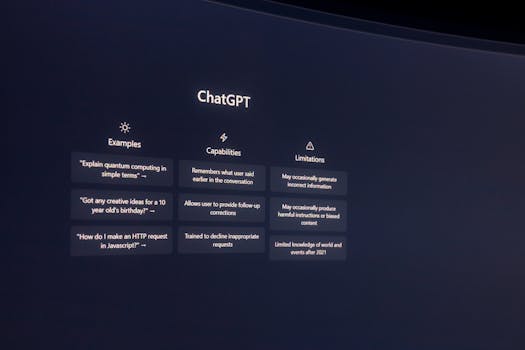
1. ChatGPT (OpenAI)
- Description: ChatGPT is one of the most popular AI text generation tools, powered by OpenAI’s GPT-4 architecture. It can answer questions, write essays, draft emails, and even generate code.
- Features: Conversational interface, multi-language support, context-aware responses.
- Pros: Highly versatile, easy to use, and capable of handling complex tasks.
- Cons: Free version has limitations on usage and may not always provide accurate or up-to-date information.
2. WriteSonic
- Description: WriteSonic is an AI writing assistant designed for marketers and content creators. It offers tools for blog posts, ad copy, product descriptions, and more.
- Features: Templates for various content types, SEO optimization, and a Chrome extension for on-the-go writing.
- Pros: User-friendly interface, tailored for marketing needs, and offers a free tier.
- Cons: Advanced features require a paid subscription.
3. Jasper (Free Trial)
- Description: Jasper is an AI writing tool focused on long-form content like blog posts and articles. It’s known for its ability to maintain tone and style consistently.
- Features: 50+ templates, plagiarism checker, and collaboration tools.
- Pros: Excellent for professional content creation, integrates with popular platforms.
- Cons: Free trial is limited, and full access requires a subscription.
4. Hugging Face’s Transformers
- Description: Hugging Face offers a library of pre-trained AI models for text generation, including GPT, BERT, and T5. It’s ideal for developers and researchers.
- Features: Open-source models, customizable for specific tasks, and a community-driven platform.
- Pros: Highly flexible, free to use, and great for advanced users.
- Cons: Requires technical knowledge to implement and use effectively.
5. Rytr
- Description: Rytr is an affordable AI writing tool that caters to bloggers, freelancers, and small businesses. It supports over 30 languages and 20+ tones.
- Features: Simple interface, bulk content generation, and a built-in plagiarism checker.
- Pros: Cost-effective, easy to use, and offers a free plan with limited features.
- Cons: Output quality may vary, and advanced features are locked behind a paywall.
The Future of AI Text Generation
As AI technology continues to evolve, we can expect even more sophisticated text generation tools. Future advancements may include:
- Improved Context Understanding: AI models that better grasp nuances, sarcasm, and cultural references.
- Multimodal Capabilities: Combining text generation with image and video creation for richer content.
- Personalization: AI tools that adapt to individual writing styles and preferences.
- Ethical AI: Enhanced safeguards to prevent misuse, such as plagiarism or misinformation.
Challenges and Ethical Considerations
While AI text generation offers immense potential, it’s not without challenges. Key concerns include:
- Plagiarism: AI-generated content may inadvertently replicate existing text.
- Bias: Models can inherit biases from their training data, leading to unfair or inaccurate outputs.
- Misinformation: AI tools can generate convincing but false information if not properly monitored.
- Job Displacement: There’s a fear that AI could replace human writers, though most experts believe it will augment rather than replace human creativity.
Conclusion
AI for text generation is a powerful tool that’s democratizing content creation and transforming industries. Whether you’re a seasoned writer or just starting out, these tools can help you save time, overcome creative blocks, and produce high-quality content. With the right approach, AI can be a valuable ally in your writing journey.
Ready to give it a try? Explore the free tools mentioned above and see how AI can enhance your writing process. Leave a comment below to share your experiences or ask questions—we’d love to hear from you! And don’t forget to follow our blog for more insights into AI tools and technologies.
Happy writing! 🚀